How small restaurants can compete with delivery apps
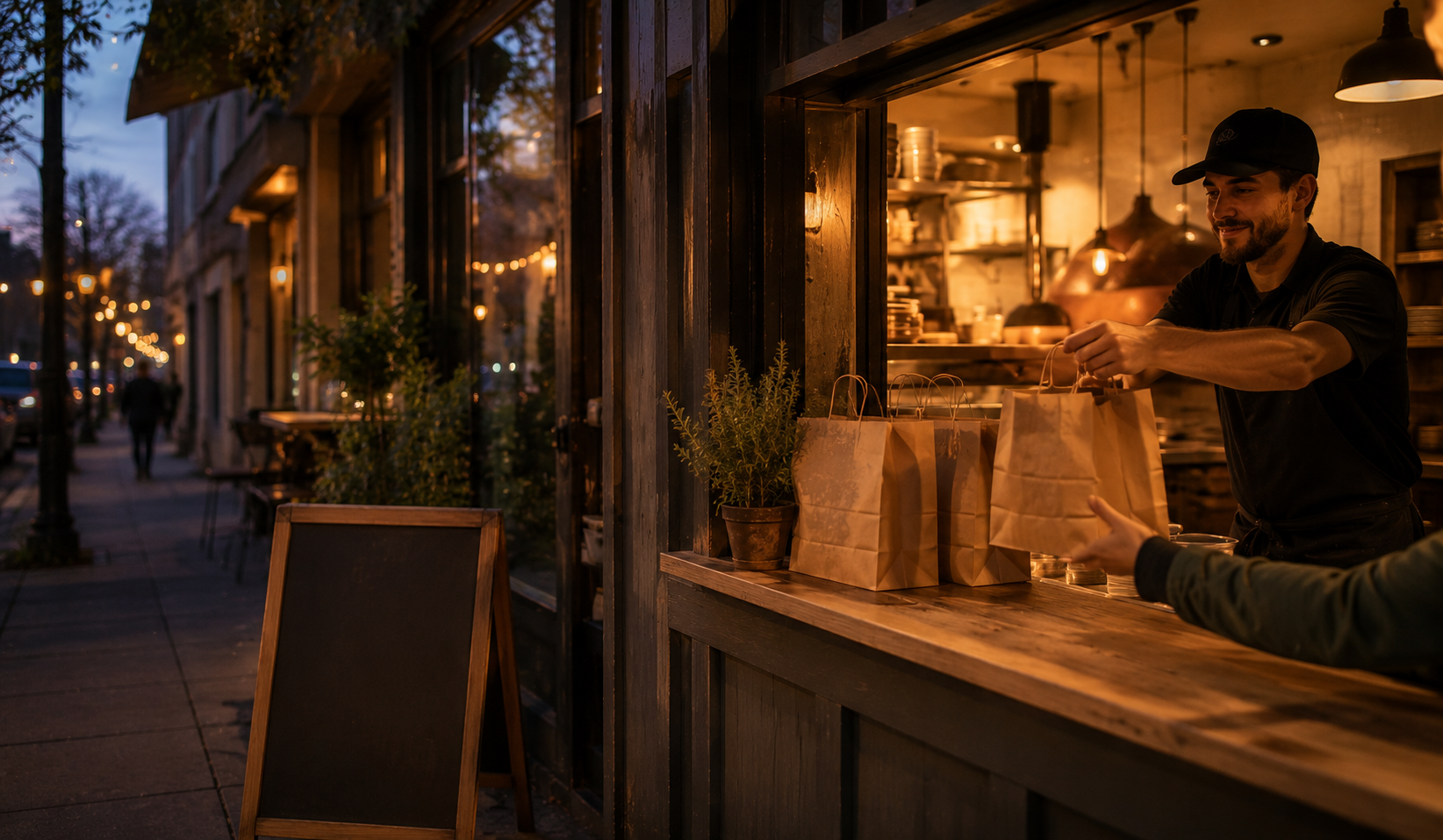
Third-party delivery apps charge 15–30% per order. For a small restaurant doing $50,000 a month in delivery, that is $7,500 to $15,000 a month in commissions. Multiply by twelve and you are looking at $90,000 to $180,000 a year — a small restaurant’s entire profit. There is a better way, and it does not mean dropping the apps.
Two-track strategy: apps for discovery, your site for profit
Use the apps for what they are good at: top-of-funnel discovery, brand exposure, last-mile logistics. Use your own site, app and phone line for the orders that already know you. Most operators we work with can move 20–40% of orders to direct channels within a year, without losing a single app sale.
Five concrete moves
- A great online ordering page. Faster than the apps, no fees, branded to you. Most restaurant tech now includes this.
- Repeat-order incentives. “10% off your next direct order.” Once a guest has ordered directly once, the lifetime value gap is huge.
- Your own SMS list. The most underrated channel in food. A weekly “Wednesday special” text to 1,000 regulars beats 10,000 app impressions.
- Pickup as a feature, not a fallback. Promote it. 5% off pickup, ready in 12 minutes, no fees, no awkward handoff.
- Loyalty, owned. Points you store yourself, on your database, that you can email and text — not buried inside an app where you can never reach the guest again.
The math
If you do $50K/month in delivery today at 22% blended commission, that is $11,000 a month to the apps. Move 30% of those orders to direct channels over six months, and you keep roughly $3,300 a month in margin — or $40,000 a year. That is the salary of a part-time marketing person who can run the program going forward.
For an all-in-one system that handles direct online ordering, pickup, loyalty and SMS marketing, see Finio’s direct-order module.