How restaurants can cut food waste by 30% with smarter inventory
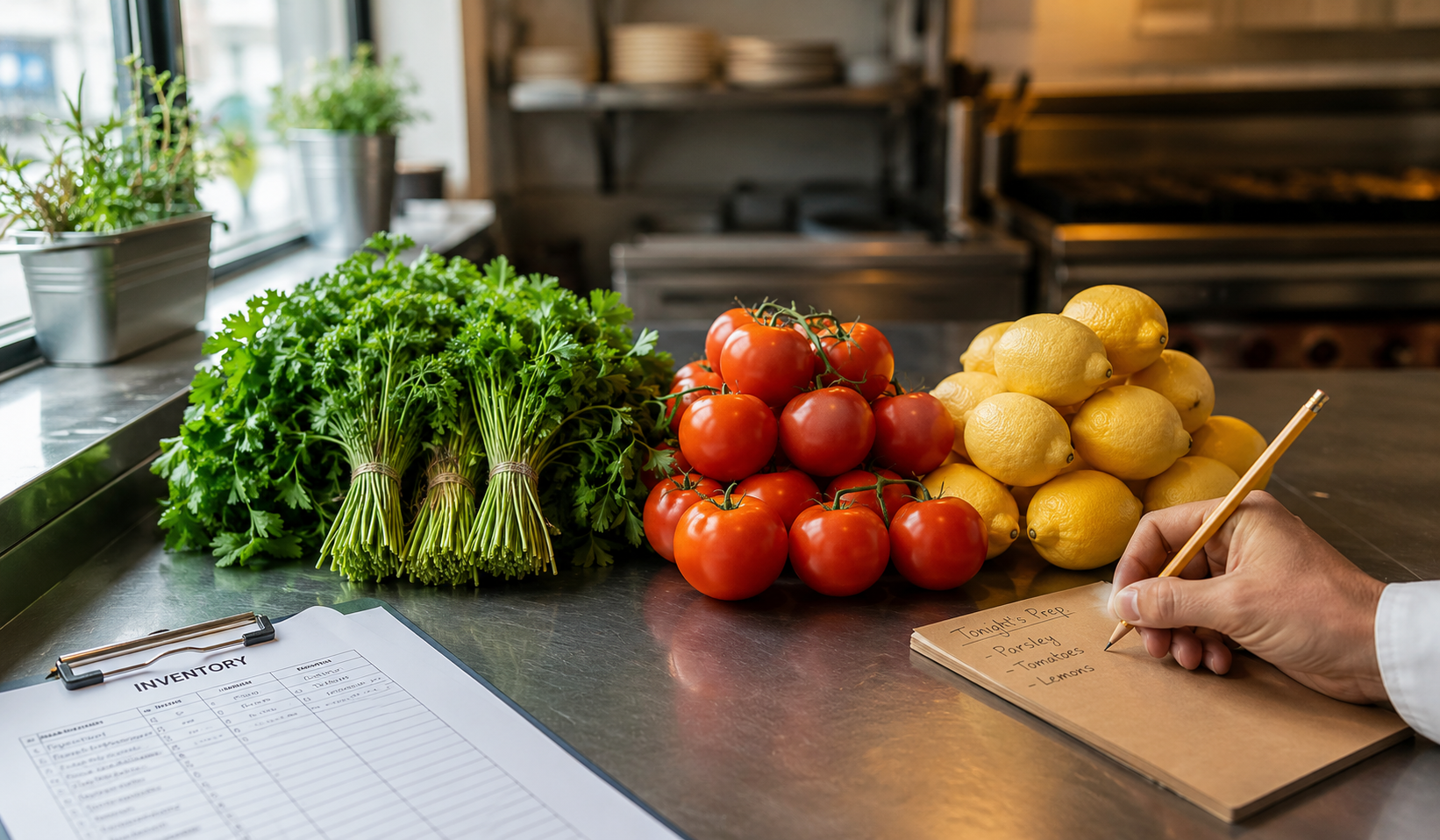
Food waste is one of the largest controllable costs in any restaurant. Industry averages put kitchen waste at 4–10% of food purchased — for a mid-sized restaurant doing $1.2M in revenue, that is between $48,000 and $120,000 every year, thrown in the bin. The good news: a few disciplined habits can reclaim most of it.
Start with a real count, every day
The single highest-leverage change is counting what you actually have. Walk the kitchen at the same time every day, write it down, and stop guessing. Most operators we work with report 20–30% reductions within six weeks of doing this consistently.
- Count by ingredient, not by supplier or invoice.
- Use the same unit each time (grams, bottles, units).
- Record waste separately from usage — never mix the two.
Tune your par levels with last week's data
Once you have a week of counts, your par levels become obvious. Par is simply how much you want on hand at the start of service — set it too high and waste climbs, set it too low and you run out mid-rush.
“We cut our waste from 9% to 4% in six weeks — the only change was counting every morning and writing it down.” — Owner, 24-seat bistro
Track the four numbers that actually matter
Tools like Finio surface these automatically, but the principle applies with a notebook too:
- Cost of goods sold (CoGS) as a percentage of revenue. Target: 28–32% for full-service, 25–30% for QSR.
- Waste value in dollars per service.
- Variance between theoretical and actual usage — the gap is theft, mistake or waste.
- Turnover on each ingredient — slow movers cost you money twice.
What to do this week
You do not need software to start. Print a single sheet, list your top 30 ingredients, and count them every morning for two weeks. After day 14, you will see patterns that are invisible right now — and the savings start to compound immediately.